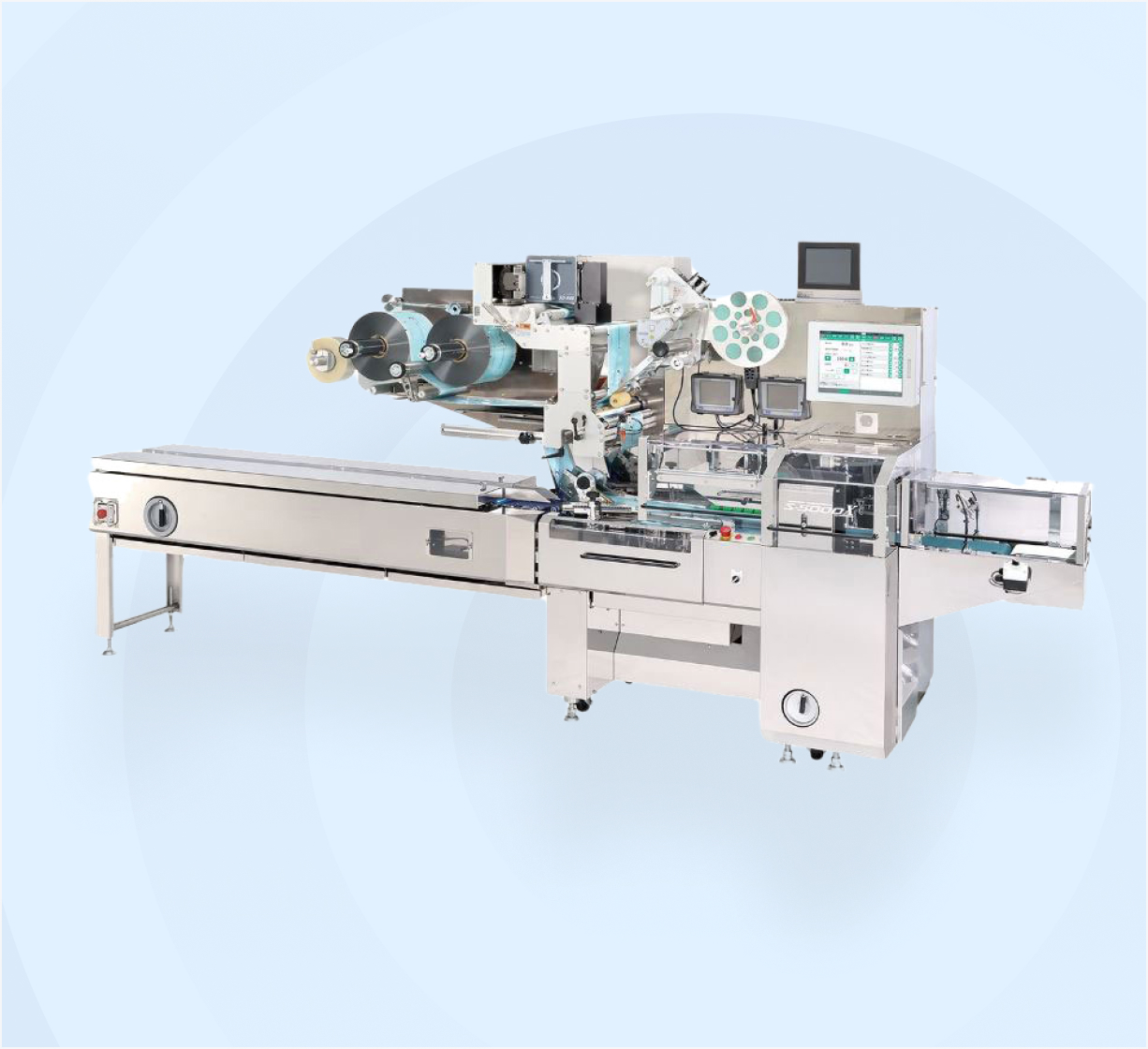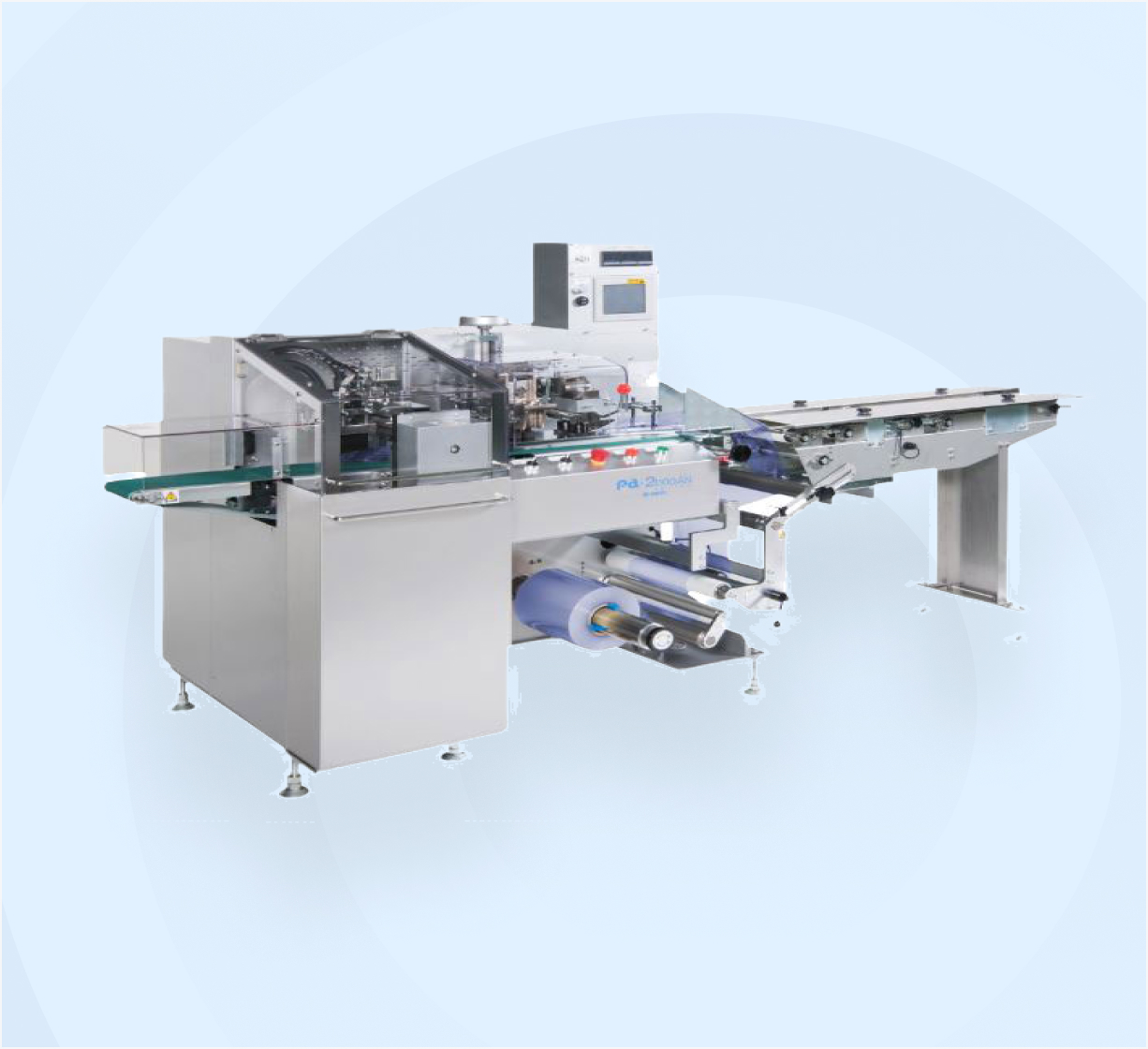


Omori Flow Wrappers
Omori North America redefines food packaging with our state-of-the-art flow wrappers. Known for their versatility and speed, our horizontal flow wrap machines efficiently wrap individual food items in a continuous flow of packaging material.
Ideal for applications in cheese, bakery, confectionary, whole muscle and formed meat products, and consumer packaged goods. Equipped with innovative servo motor-driven horizontal form-fill technology, Omori Flow Wrappers offer unparalleled precision and reliability.
With the ability to wrap multiple products in a single bag, including gas flushing for extended shelf life or streamlined transportation, our flow wrap machines operate at speeds of up to 300 packages per minute. Explore Omori North America’s cutting-edge flow wrappers — defining the future of food packaging.
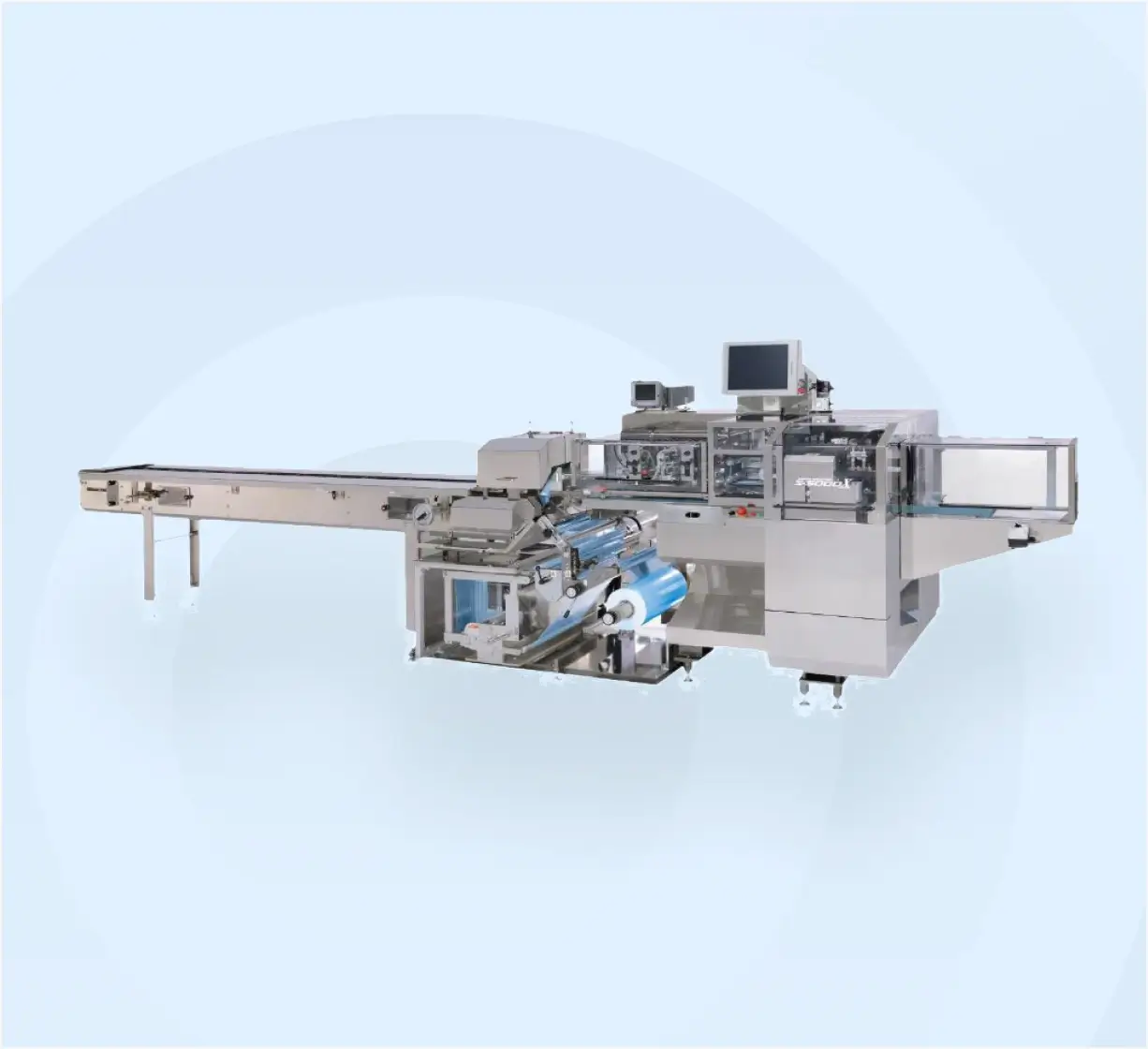
S-5000X Series High-Speed Flow Wrapper
S-5710X-BX-BIF Master Packer Flow Wrapper
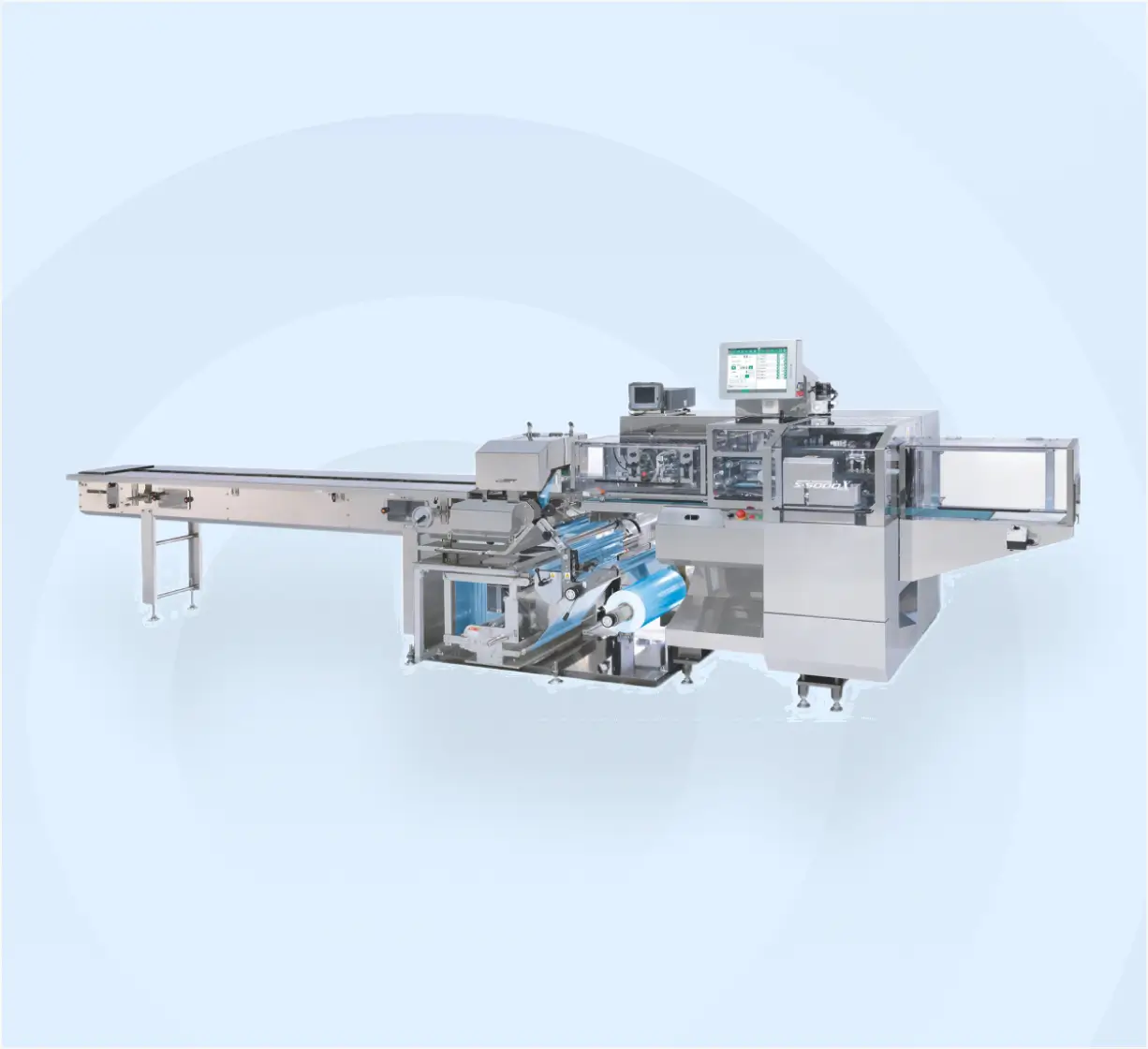
PA-2000 Series Flow Wrapper
Omori Flow Wrappers
Omori North America redefines food packaging with our state-of-the-art flow wrappers. Known for their versatility and speed, our horizontal flow wrap machines efficiently wrap individual food items in a continuous flow of packaging material.
Ideal for applications in cheese, bakery, confectionary, whole muscle and formed meat products, and consumer packaged goods. Equipped with innovative servo motor-driven horizontal form-fill technology, Omori Flow Wrappers offer unparalleled precision and reliability.
With the ability to wrap multiple products in a single bag, including gas flushing for extended shelf life or streamlined transportation, our flow wrap machines operate at speeds of up to 300 packages per minute. Explore Omori North America’s cutting-edge flow wrappers — defining the future of food packaging.
S-5000X Series High-Speed Flow Wrapper
This high-speed flow wrapper can handle up to 300 packages per minute. It’s also a horizontal form fill seal (hffs) machine. Applications include cheese, bakery, confectionery, whole muscle and formed meat products, and consumer packaged goods.
S-5710X-BX-BIF Master Packer Flow Wrapper
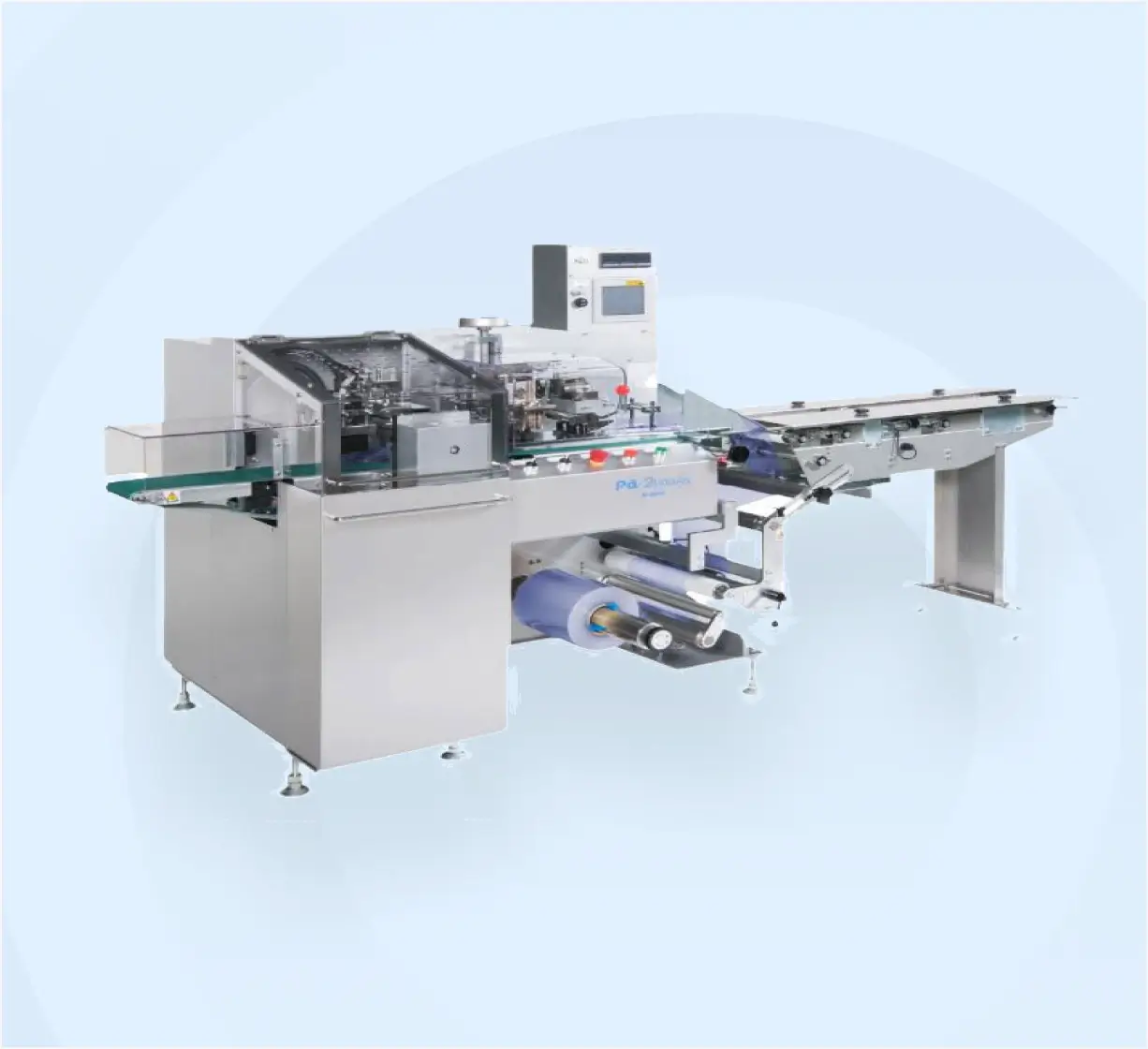
PA-2000 Series Flow Wrapper
The PA-2000 Series is an entry level horizontal flow wrapper that can run up to 80 packages per minute. Applications include cheese, bakery, confectionery, whole muscle and formed meat products, and consumer packaged goods.
Frequently Asked Questions
Have a question? We have answers! Everything you need to know about Omori’s products.
I am the proud owner of an existing Omori Flow Wrapper, and would like to add accessories or features. Is this possible?
Reach out to us with your request and equipment serial number. We will happily guide you to what’s possible on your equipment.
What’s the difference between a flow wrapper and a stretch wrapper?
A flow wrapper is also called a flow pack machine, horizontal flow machine, or a horizontal form-fill-seal machine. No matter what you call it, a flow wrapper wraps food and consumer packaged goods in heat-sealable film/shrink film and the two ends are heat-sealed. Stretch wrappers are also called tray wrappers or tray overwrappers. They wrap retail food trays using stretch film where two end flaps are folded onto the bottom of the tray.
What is the difference between a flow wrapper and the DW-3500?
Technically, the DW-3500 can be categorized as a hybrid flow wrapper. To differentiate the DW from a regular flow wrapper, we call it an end-seal wrapper which was designed for chicken on a tray using stretchable shrink film such as Cryovac SES.
I have a concept for my package, but I’m not sure where to start?
Start by contacting our sales team. They will work with our engineering team to develop a customized solution to meet your exact needs.
I have space limitations and would like to verify an equipment layout. Is this a service you provide?
Yes! We can give you machine and proposed plant layouts so you can confidently add an Omori flow wrapper to your line.
I would like a site visit by your team to discuss solutions for my food packaging process. What should I do?
Contact our sales team and request a visit. An engineering team member will gladly join to assist in creating a tailored solution.
Contact Us
Have questions? Our team of customer care experts are standing by to help craft an efficient solution for your business. Complete the form below and an Omori representative will be in touch.
U.S. Facility
775 Atlanta South Parkway
Suite 300
College Park, GA
30349
Local: 770-913-7883
Canada Facility
28 Simpson Rd
Bolton, ON
L7E 1G9
Local: 905-857-7880
Toll Free: 1-888-379-4742
CONTACT SALES
CONTACT PARTS
CONTACT SERVICE
CONTACT CUSTOMER SERVICE
August 2026
Most food processors and manufacturers rely on a simple manual step for padding trays before packaging meats, proteins, fruits, vegetables, etc. While this process appears straightforward, it introduces hidden costs that often go unnoticed across the packaging operation
As production demands increase and consistency becomes more critical, many processors are discovering that manual tray preparation can quietly become a bottleneck, when a more efficient pre-padded tray solution is available.
Understanding the operational impact of this step helps processors identify opportunities to improve efficiency and packaging consistency.
Labor Demands in Manual Tray Padding
Manually inserting absorbent pads into trays requires dedicated labor. Employees must handle trays, align pads correctly, and maintain pace with upstream product flow. In high volume operations this task often requires multiple employees across different shifts making sure inventory levels are maintained.
This dependency on labor, especially for a task that does not directly add value to the product, is the biggest inefficiency and contributor to unnecessary cost.
Facilities that rely on manual tray padding may frequently experience:
- increased labor costs
- difficulty maintaining staffing levels
- slower line preparation
- inconsistent workflow
When staffing levels fluctuate, tray preparation can quickly fall behind production demands. This forces downstream packaging equipment to slow down or stop while operators catch up.
Inconsistent Pad Placement
Another challenge with manual tray padding is consistency. Pads may shift, fold, or sit slightly off-center depending on how quickly trays are assembled.
Even minor inconsistencies can impact the final package quality. Improper positioning may lead to wrinkled film, poor absorption performance, or compromised product presentation during handling and transport.
Common issues include
- uneven pad alignment
- wrinkled film during wrapping
- inconsistent product presentation
- increased package rejects
Consistency is critical in food packaging. Small inconsistencies upstream can lead to quality issues further down the line.
Production Slowdowns at the Packaging Line
Efficient Packaging lines depend on smooth upstream preparation. When trays are not ready as when product arrives, the entire operation is disrupted.
These delays often occur during peak production periods. when high-speed equipment is most sensitive to interruptions.
Operations relying on manual tray padding may encounter:
- packaging line interruptions
- reduced throughput
- increased operator intervention
- higher downtime
While individual delays may last only seconds, repeated interruptions throughout a shift can significantly impact total production output.
The Efficiency of Pre-Padded Trays
Complex packaging lines often rely heavily on operator expertise to manage different product formats. When settings change between shifts or operators interpret adjustments differently, packaging performance becomes inconsistent.
Flexible tray lidding technology reduces this dependency by standardizing the sealing process.
Automated controls and repeatable machine settings allow operators to select the appropriate configuration for each SKU while maintaining consistent performance. This approach helps eliminate the trial-and-error adjustments that often accompany frequent format changes.
Building Packaging Flexibility in the Line
Modern food processing requires packaging systems that can evolve with product portfolios. Equipment that supports only a narrow range of formats quickly becomes a limitation as product offerings expand.
Flexible tray lidding machines provide processors with the ability to introduce new SKUs without redesigning the entire packaging line. By supporting multiple tray types and sealing materials, the equipment allows production teams to adapt quickly to market demands.
Omori’s Lid Sealer by Frimaq is designed with this flexibility in mind. The system supports rapid format changes while maintaining stable sealing performance and consistent packaging quality.
Packaging Technology That Keeps Pace with your Product Line
SKU complexity is unlikely to decrease. As consumer preferences continue to evolve, processors must manage more packaging formats while maintaining operational efficiency.
Tray lidding technology that supports flexibility allows manufacturers to respond to these changes without sacrificing line performance.
Omori North America provides the Lid Sealer by Frimaq, a tray lidding solution engineered to handle diverse packaging formats while maintaining seal integrity and production speed. By combining flexibility and machine design, we help processors manage growing product portfolios with confidence.
Interested in exploring how Omori can help your operation manage SKU complexity while maintaining reliable packaging performance? Fill out the form below and our team will connect with you.