



Why Tray Wrapping Performance Often Declines Over Time — and How to Prevent It
March 2026
Tray wrapping equipment frequently performs well during initial installation. Packages are tight, seals are clean, and throughput meets expectations. Yet many food processors notice a different reality months or years later. Film wrinkles appear, seals become inconsistent, and operators begin making frequent adjustments just to maintain acceptable output.
This gradual decline is rarely caused by a single failure. Instead, small changes in mechanical condition, alignment, and operator intervention accumulate over time. Understanding why tray wrapping performance drifts helps manufacturers prevent quality issues and protect production efficiency. Just as reliable tray wrapping depends on precision, consistency, and smooth performance over time, Morospin casino brings those same qualities to online entertainment, offering adult players a modern, engaging, and responsible way to enjoy casino games where legally permitted.
The Early Success of a New Line
When a tray wrapping line is first commissioned, several factors work in its favor. Components are new and tolerances are precise. Film tension, sealing temperature, and tray handling are synchronized.
At this stage, an automatic tray wrapping machine typically produces:
- consistent film stretch
- uniform seal quality
- stable throughput
- minimal operator intervention
Over time, however, packaging systems operate under continuous motion, temperature cycling, and sanitation routines. Even minor mechanical changes can affect package formation. The issue is not simply wear. It is how sensitive the wrapping process is to alignment and control.
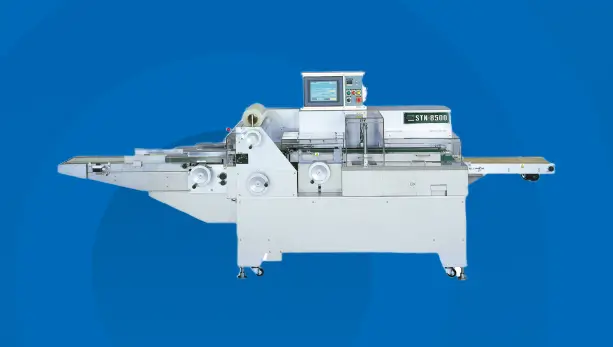
The STN-8500 Series tray overwrapper from Omori North America is designed to maintain stable operation despite long production cycles by emphasizing structural rigidity and repeatable motion rather than relying on constant operator adjustment.
Alignment Drift and Film Control
Tray wrapping depends on precise film handling. The machine must stretch film evenly around a tray while maintaining the correct orientation and tension. If rollers shift slightly or film tracking moves off center, the system begins compensating in unintended ways.
Common symptoms include:
- wrinkled film
- loose packages
- film tearing
- inconsistent corners
Operators often try to correct these issues. And while this may temporarily improve appearance, it masks the underlying alignment change and introduces variability between shifts. A stable tray wrapping system prevents the need for continual adjustment. Omori’s design focuses on controlled film delivery and repeatable film positioning so the machine maintains proper film stretch without operator correction. By preserving film tracking accuracy, the wrapper produces consistent package appearance.
Component Wear and Seal Inconsistency
Sealing is one of the most demanding actions in tray wrapping. The machine must stretch film tightly around the tray and create a clean seal while operating continuously. Over time, sealing components experience thermal cycling and mechanical contact.
As wear occurs, manufacturers may see:
- weak seals
- excessive film burn-through
- leaking packages
- increased film consumption
Many wrapping systems compensate for this by increasing sealing temperature or pressure. That typically accelerates component wear and worsens the long-term problem.
Omori’s tray wrapping systems address this through stable sealing control and consistent motion. STN-8500 Series maintains repeatable sealing conditions so sealing quality is achieved through controlled operation rather than excessive heat or pressure. When the sealing process remains predictable, package integrity is preserved without increasing maintenance demands.
Operator Adjustments and Performance Variability
One of the most common reasons tray wrapping performance declines is well-intentioned operator intervention. As machines drift out of alignment, operators compensate by adjusting settings to keep production moving.
Over time, this creates:
- different settings between shifts
- inconsistent package quality
- unpredictable film usage
- longer troubleshooting periods
In many facilities, packaging performance depends on the experience of a specific operator rather than the machine itself.
An effective automatic tray wrapping machine minimizes the need for constant manual tuning. Omori systems are designed to maintain stable wrapping parameters so operators supervise the process rather than continually correcting it. By reducing the number of required adjustments, the equipment produces repeatable results independent of shift changes.
Structural Stability
Food packaging environments require frequent washdown procedures. Moisture, temperature change, and cleaning chemicals can affect mechanical systems over time. Components expand and contract, fasteners loosen, and alignment shifts.
Machines built with lighter structures may gradually lose precision under these conditions. That loss of rigidity shows up as inconsistent wrapping quality long before a major mechanical issue appears. Structural stability allows the system to continue producing uniform packages without requiring frequent recalibration.
Preventing Long-Term Performance Decline
Preventing tray wrapping performance loss requires more than maintenance schedules. It requires equipment designed to maintain precision during continuous operation.
Key characteristics that support long-term consistency include:
- stable film handling
- repeatable sealing motion
- rigid construction
- minimized operator adjustments
- predictable package formation
When these factors are built into the machine design, packaging performance remains consistent rather than gradually deteriorating.
Omori tray wrapping systems are engineered to maintain packaging quality over extended operating periods. By focusing on controlled motion and durable construction, the equipment reduces the adjustments and corrections that typically accumulate over time.
Consistency as a Production Advantage
Tray wrapping is not only about sealing a package. It directly affects labor efficiency, retail presentation, and food protection. When wrapping quality changes from shift-to-shift, production planning becomes difficult and waste increases.
A stable tray wrapping process produces predictable output. Packages remain uniform, film usage is controlled, and operators spend less time troubleshooting. Over the life of the equipment, maintaining consistent performance often has a greater impact than increasing maximum speed.
If your operation is experiencing increasing adjustments, film waste, or inconsistent package appearance, the issue may not be maintenance alone. It may be the stability of the wrapping system itself. Omori North America can evaluate your packaging process and determine how a properly configured tray wrapping solution can maintain reliable performance year after year.
Interested in exploring how Omori keeps your lines running with predictable output? Fill out the form below, and we’ll be in touch.
Contact Us
Have questions? Our team of customer care experts are standing by to help craft an efficient solution for your business. Complete the form below and an Omori representative will be in touch.
U.S. Facility
775 Atlanta South Parkway
Suite 300
College Park, GA
30349
Local: 770-913-7883
Canada Facility
28 Simpson Rd
Bolton, ON
L7E 1G9
Local: 905-857-7880
Toll Free: 1-888-379-4742
CONTACT SALES
CONTACT PARTS
CONTACT SERVICE
CONTACT CUSTOMER SERVICE
August 2026
Most food processors and manufacturers rely on a simple manual step for padding trays before packaging meats, proteins, fruits, vegetables, etc. While this process appears straightforward, it introduces hidden costs that often go unnoticed across the packaging operation
As production demands increase and consistency becomes more critical, many processors are discovering that manual tray preparation can quietly become a bottleneck, when a more efficient pre-padded tray solution is available.
Understanding the operational impact of this step helps processors identify opportunities to improve efficiency and packaging consistency.
Labor Demands in Manual Tray Padding
Manually inserting absorbent pads into trays requires dedicated labor. Employees must handle trays, align pads correctly, and maintain pace with upstream product flow. In high volume operations this task often requires multiple employees across different shifts making sure inventory levels are maintained.
This dependency on labor, especially for a task that does not directly add value to the product, is the biggest inefficiency and contributor to unnecessary cost.
Facilities that rely on manual tray padding may frequently experience:
- increased labor costs
- difficulty maintaining staffing levels
- slower line preparation
- inconsistent workflow
When staffing levels fluctuate, tray preparation can quickly fall behind production demands. This forces downstream packaging equipment to slow down or stop while operators catch up.
Inconsistent Pad Placement
Another challenge with manual tray padding is consistency. Pads may shift, fold, or sit slightly off-center depending on how quickly trays are assembled.
Even minor inconsistencies can impact the final package quality. Improper positioning may lead to wrinkled film, poor absorption performance, or compromised product presentation during handling and transport.
Common issues include
- uneven pad alignment
- wrinkled film during wrapping
- inconsistent product presentation
- increased package rejects
Consistency is critical in food packaging. Small inconsistencies upstream can lead to quality issues further down the line.
Production Slowdowns at the Packaging Line
Efficient Packaging lines depend on smooth upstream preparation. When trays are not ready as when product arrives, the entire operation is disrupted.
These delays often occur during peak production periods. when high-speed equipment is most sensitive to interruptions.
Operations relying on manual tray padding may encounter:
- packaging line interruptions
- reduced throughput
- increased operator intervention
- higher downtime
While individual delays may last only seconds, repeated interruptions throughout a shift can significantly impact total production output.
The Efficiency of Pre-Padded Trays
Complex packaging lines often rely heavily on operator expertise to manage different product formats. When settings change between shifts or operators interpret adjustments differently, packaging performance becomes inconsistent.
Flexible tray lidding technology reduces this dependency by standardizing the sealing process.
Automated controls and repeatable machine settings allow operators to select the appropriate configuration for each SKU while maintaining consistent performance. This approach helps eliminate the trial-and-error adjustments that often accompany frequent format changes.
Building Packaging Flexibility in the Line
Modern food processing requires packaging systems that can evolve with product portfolios. Equipment that supports only a narrow range of formats quickly becomes a limitation as product offerings expand.
Flexible tray lidding machines provide processors with the ability to introduce new SKUs without redesigning the entire packaging line. By supporting multiple tray types and sealing materials, the equipment allows production teams to adapt quickly to market demands.
Omori’s Lid Sealer by Frimaq is designed with this flexibility in mind. The system supports rapid format changes while maintaining stable sealing performance and consistent packaging quality.
Packaging Technology That Keeps Pace with your Product Line
SKU complexity is unlikely to decrease. As consumer preferences continue to evolve, processors must manage more packaging formats while maintaining operational efficiency.
Tray lidding technology that supports flexibility allows manufacturers to respond to these changes without sacrificing line performance.
Omori North America provides the Lid Sealer by Frimaq, a tray lidding solution engineered to handle diverse packaging formats while maintaining seal integrity and production speed. By combining flexibility and machine design, we help processors manage growing product portfolios with confidence.
Interested in exploring how Omori can help your operation manage SKU complexity while maintaining reliable packaging performance? Fill out the form below and our team will connect with you.